
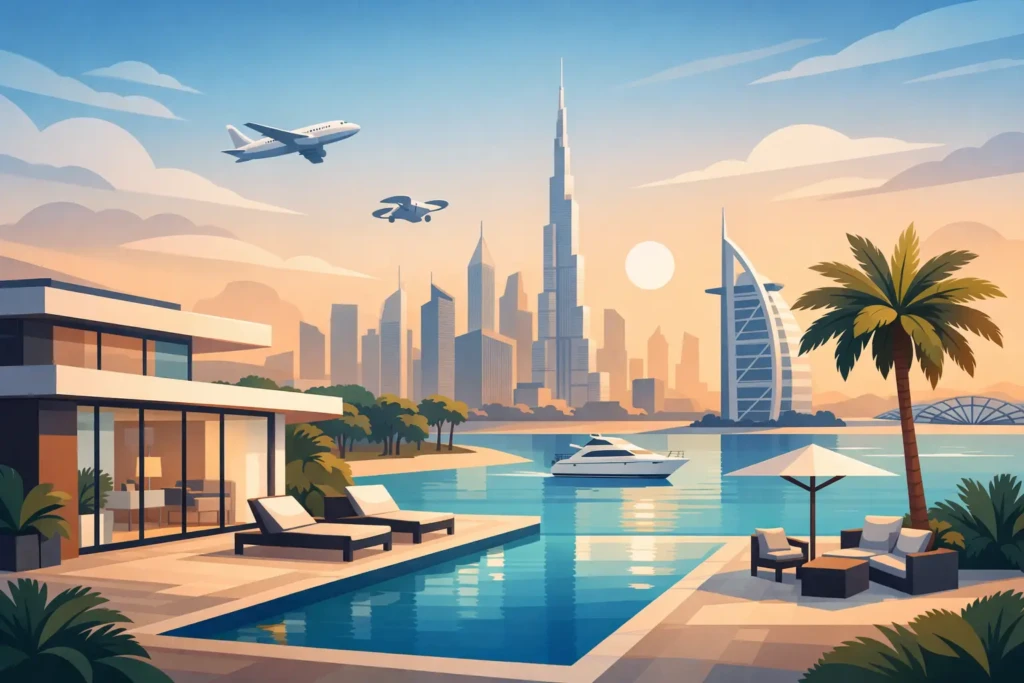
A five-night family trip used to mean choosing between two imperfect options: a hotel room that felt too small by day two, or a rental apartment that looked good online but came with uneven service. That gap is exactly where the future of holiday homes Dubai is taking shape. Guests are no longer booking space alone. They are booking reliability, location, flexibility, and the confidence that someone will actually help when plans shift.
That shift matters because Dubai has matured as a travel market. Visitors still want the excitement – beachfront mornings on Palm Jumeirah, late dinners in Dubai Marina, shopping and skyline views Downtown – but they now expect a more complete stay. For many travelers, especially families, couples, small groups, and extended-stay guests, a well-managed holiday home feels better aligned with how they actually travel.
Why the future of holiday homes Dubai looks stronger
Holiday homes are moving away from the old idea of a simple short-term rental. The market is becoming more hospitality-led, which is a meaningful difference. A professionally managed apartment in a prime neighborhood can now offer the privacy and room of a home with many of the reassurances guests once associated only with hotels.
That blend is likely to define the next stage of growth. Travelers want a full kitchen, separate living space, laundry, and room to settle in. At the same time, they want responsive communication, smooth check-in, well-maintained interiors, and support that does not disappear after payment. The properties that succeed will be the ones that treat service as part of the product, not an extra.
Dubai is especially well positioned for this model because visitor demand is diverse. Some guests arrive for a long weekend, others for a month-long family stay, and many combine business with leisure. A one-size-fits-all accommodation model rarely works for all three. Holiday homes can, if they are managed properly.
Guests are choosing experience over square footage alone
A larger apartment still matters, but size by itself no longer wins bookings. Guests are becoming more selective about the quality of the overall experience. Is the property in a neighborhood that suits the trip? Does the design feel current and comfortable rather than purely decorative? Is there enough support for late arrivals, children, remote work, or last-minute adjustments?
This is where premium operators stand apart from anonymous listings. The apartment may draw attention, but trust closes the booking. Clear standards, thoughtful furnishings, and consistent guest care are becoming central to demand, particularly for international travelers booking from the US and other overseas markets who want fewer unknowns before arrival.
For families, that may mean practical comforts such as dining space, multiple bedrooms, and kitchens stocked for real use. For couples, it may be privacy, views, and easy access to dining and beaches. For relocation guests and longer stays, it often comes down to neighborhood livability, storage, work-friendly layouts, and support that feels personal rather than transactional.
Technology will matter, but not in the way many expect
When people talk about the future, they often jump straight to apps, smart locks, and automated messaging. Those tools will certainly play a role, but technology on its own will not define the future of holiday homes Dubai. It will be judged by how well it removes friction without making the stay feel impersonal.
Digital check-in, instant confirmations, secure payments, and smart access can make travel easier, especially after long flights or late arrivals. But luxury hospitality is not built on automation alone. It is built on good timing, useful communication, and the feeling that help is available when needed.
The most effective operators will use technology quietly. Guests should notice convenience, not complexity. If a traveler needs restaurant guidance, extra linens, a crib, or help adjusting a booking, the human response still matters more than the system behind it.
Location strategy will shape demand more than volume
Not every area performs the same way, and future growth will favor properties in neighborhoods with a clear guest appeal. That does not always mean the most expensive address. It means the right match between property type and travel purpose.
Beach-oriented travelers may continue to favor Palm Jumeirah and JBR for resort-style leisure and family downtime. Guests who want dining, nightlife, and walkability may lean toward Dubai Marina. Those planning a city-forward stay with iconic views, shopping, and easy access to major attractions often gravitate to Downtown and Business Bay. For sports events, value-conscious extended stays, or practical access needs, other communities can perform well too.
This is one reason curated portfolios will matter more than endless choice. Guests do not want hundreds of random options. They want a smaller set of homes that are well selected, honestly presented, and suited to specific kinds of stays.
Regulation and professionalism are raising the standard
One of the healthiest signs for the market is that expectations are rising on both the guest and owner side. Compliance, operational discipline, and maintenance standards are becoming more important, not less. That is good for everyone involved.
For guests, stronger standards usually mean more dependable experiences. For property owners, they create a more stable path to revenue and better brand positioning. The trade-off is that casual hosting becomes harder to sustain at a premium level. A beautiful apartment in a strong location can still underperform if guest communication is slow, pricing is inconsistent, or upkeep is neglected.
Professional management is likely to become even more valuable as competition increases. Owners will need better photography, smarter rate strategy, faster support, stronger cleaning systems, and a hospitality mindset that protects reviews and repeat bookings. In practice, the future may involve fewer loosely managed listings and more homes operated with hotel-level discipline.
Longer stays are becoming part of the story
Short city breaks remain important, but another trend is quietly reshaping demand: guests who stay longer and expect more from the property than a vacation base. Remote workers, relocating professionals, families between homes, and extended visitors often want furnished accommodation that feels settled from day one.
That changes what makes a property attractive. Reliable Wi-Fi, functional kitchens, laundry, storage, building amenities, and neighborhood convenience move higher on the list. So does support. A guest staying three or four weeks will notice the difference between basic access and attentive service much more than someone staying two nights.
This part of the market has real potential because it sits between traditional hospitality and residential leasing. It asks for flexibility, but also consistency. Operators who can provide both are likely to see stronger loyalty and more direct repeat business over time.
What property owners should watch closely
For owners, the opportunity remains compelling, but the market is less forgiving than it once was. Strong returns are still possible, particularly in prime buildings and established travel neighborhoods, yet performance will depend on execution.
Design standards matter because guests compare every listing against a polished global market. Pricing matters because overshooting can reduce occupancy quickly, while underpricing leaves revenue on the table. Service matters because one weak stay can affect future booking momentum. And calendar strategy matters because demand in Dubai can shift with seasonality, events, and travel patterns.
Owners should also think beyond income in the narrow sense. The right management partner helps protect the asset itself. Preventive maintenance, guest screening, housekeeping consistency, and inventory control all affect long-term property condition. This is where hospitality-led management becomes more than a convenience. It becomes part of preserving value.
For brands like Zennova Vacation Homes, this is where guest care and owner performance naturally meet. The same attention that creates a reassuring stay for travelers also supports stronger long-term results for the home.
What travelers can expect next
The next generation of holiday homes will likely feel more refined, not more complicated. Guests can expect better curation, clearer communication, and homes designed around real use rather than just listing photos. They can also expect a more tailored experience, with stays that reflect why they are visiting in the first place – family vacation, romantic break, relocation period, or extended city stay.
That does not mean every holiday home will feel identical. Nor should it. The best properties will still have personality and a sense of place. What should become more consistent is the standard behind them: thoughtful preparation, honest presentation, and support that helps a trip go smoothly.
The future of holiday homes Dubai is not about replacing hotels. It is about offering a more fitting alternative for travelers who want room to live, not just sleep, while still feeling cared for throughout the stay.
As expectations rise, the most memorable stays will be the ones that combine beautiful space with calm, capable hospitality – because comfort is not only about where you stay, but how confidently you can settle in.